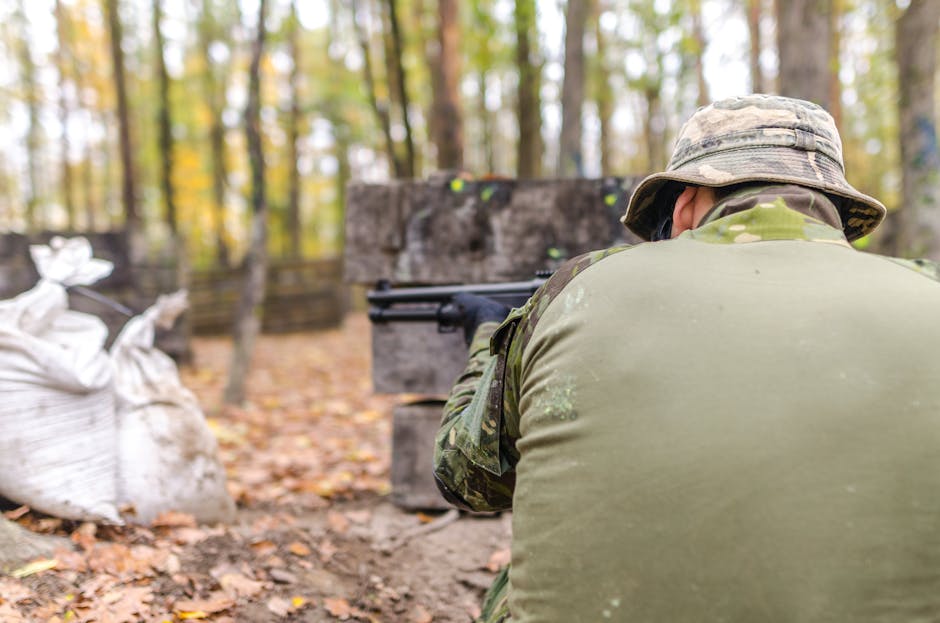

You showed up at dawn. Mist clinging to your jacket. Map crumpled in one hand.
Radio static hissing in the other.
This isn’t cosplay. It’s not a weekend larp.
It’s the Undergrowthgameline Hosted Event.
And if you’re standing there wondering why no one told you about the checkpoint rotation (or) why last month’s rain delay changed the entire route. You’re not alone.
I’ve been in that clearing every season for six years. Watched rules shift with the weather. Seen local groups rewrite protocols mid-event because the forest said so.
That’s not chaos. It’s coordination.
Most guides treat this like it’s just another game night. It’s not. The timing, the comms, the terrain prep.
It all matters.
You don’t need theory. You need what actually works on the ground.
So I’m laying out exactly how these gatherings are built. Not from a manual. From boots-on-the-trail experience.
What goes where. Who talks to whom. When things change (and) why they change.
No fluff. No assumptions. Just the structure behind the mist.
By the end of this, you’ll know how to join, lead, or even host one. Without guessing.
Undergrowth Game Line: Not Just Another Meetup
I run these. I’ve seen what happens when you skip the prep.
The this post is where the real structure lives. That’s where you’ll find the official docs, gear checklists, and season-long narrative maps. (Not the fan wikis.
Those are outdated by Tuesday.)
Three things are non-negotiable for every gathering: pre-registered participation, terrain-aligned scenario design, and integrated safety & communication protocols.
No exceptions. No “just show up and we’ll figure it out.”
Standard play sessions? You get 12 people showing up with mismatched radios and zero med kits. Attendance caps?
None. Gear checks? Maybe if someone remembers.
Debriefs? Rarely happen. And when they do, they’re five minutes of “cool fight, bro.”
We cap at 8. Every person confirms gear before arrival. Every debrief is mandatory (and) recorded.
Why? Because “organized” isn’t about paperwork. It’s how we stack story beats across gatherings.
Spring’s Ravine Protocol used GPS-tagged waypoints to open up audio logs only active between April 12 (15,) 2023. Miss that window? You miss the betrayal twist.
That’s not flavor text. That’s continuity you can’t fake.
This isn’t improv theater. It’s a live, layered narrative engine.
An Undergrowthgameline Hosted Event is the only way to access that engine.
You want real consequences? Real stakes? Then show up ready (or) don’t show up at all.
How to Actually Join or Run an Undergrowth Game Line Gathering
I’ve hosted six. I’ve joined eleven. Some went smooth.
Others? Not so much.
You need six weeks before the event just to get vetted as a participant. Not five. Not six and a half.
Six. And if you’re late, you’re not “on the waitlist.” You’re out.
Three weeks before? That’s when gear verification happens. Upload photos of your comms gear, your terrain kit, your emergency beacon.
All in the Undergrowth Sync app v3.2+. Anything older than v3.2 fails silently. No warning.
Just a red X.
Seventy-two hours before? Briefing drops. If it hasn’t hit your encrypted channel by then, check your app permissions.
Or your internet. Or your patience.
Hosts. Yes, you’re on the hook for terrain risk docs. Yes, you must route emergency contacts before sign-ups close.
And yes, every facilitator needs current certification. Not “almost current.” Not “I’ll renew next month.” Current.
Late gear uploads trigger automatic waitlist promotion. I’ve seen it wipe out a full team slot in under two minutes.
Mismatched player tiers? That kills scenario access instantly. Tier 2 players can’t join Tier 3 ops.
Full stop.
No workarounds. No exceptions.
This isn’t bureaucracy. It’s how people stay safe in real woods with real radios and real consequences.
An Undergrowthgameline Hosted Event only works when everyone treats the checklist like a contract. Not a suggestion.
Pro tip: Test your encrypted channel before uploading gear. Half the failures happen there.
What an Undergrowth Game Line Gathering Actually Feels Like
I showed up at 9 a.m. No check-in desk. Just a volunteer handing me biodegradable marker flags.
Orange for “safe zone,” moss green for “recon complete.” They felt rough in my palm. Real.
I covered this topic over in Gameathlon From Undergrowthgames.
The orientation huddle lasted eight minutes. Not ten. Not twelve.
Eight. We stood on packed dirt, not carpet. Someone played a low cello note through a speaker buried in the ferns.
That was the signal: start listening to the ground.
Zone-based objectives dropped at 10 a.m. My team got the ravine sector. No printed maps.
Just terrain-specific audio cues. Three clicks meant “look up,” a hum meant “check soil moisture.” I dug my fingers into damp clay. Felt the token click into my palm when we confirmed the old well location.
That tactile feedback token? It vibrated once. Cold.
Satisfying.
Then the wind picked up. Not a warning. A switch.
Acoustic masking kicked in (subtle) white noise layered under our comms. We rerouted without debate. That’s how agency works here: you choose stealth or negotiation.
But only after finishing environmental reconnaissance. No skipping it. Ever.
Rain hit at 2 p.m. Alternate route mapping auto-unlocked on our tablets. No panic.
Just new lines drawn in real time.
The debrief wasn’t PowerPoint. We sat in a circle. Passed around the same water bottle.
Spoke for 90 seconds each. No notes. Just what landed.
This isn’t theater. It’s friction with purpose.
If you want to see how this scales, check out the Gameathlon from undergrowthgames. They ran 17 of these in one weekend across four states.
That’s a real Undergrowthgameline Hosted Event.
Consistency Isn’t Repetition. It’s Recognition

I used to think repeating the same debrief questions every session would bore people. Turns out? It does the opposite.
When players see the same logbook format or hear the same opening prompt, their brains relax. They stop decoding structure and start diving deeper into story.
That’s how you get longitudinal player insight (not) from tracking stats, but from spotting how someone’s answers shift over three sessions. Did they go from “I don’t know” to naming two NPCs by name? That’s real investment.
78% of players who’ve done more than one season say this consistency made them care more about the world. Not less. (Source: Undergrowthgameline participant survey, 2023.)
Here’s what nobody talks about: predictable pacing lets me drop tiny lore details that only land if you were there last time. A scratched symbol on a door. A rumor that changes meaning in session four.
And no (consistent) doesn’t mean rigid. I pivot mid-session all the time. The script adapts.
The structure holds.
You don’t need chaos to feel alive. You need trust.
If you want to see how this works live, check out the this post. It’s the clearest example I know of structured flexibility in action. Undergrowthgameline Hosted Event.
The Line Starts Where You Step In
I’ve shown you how to begin. Not just join. Begin.
This isn’t another game signup. It’s your entry into something that breathes and reacts. Built on real coordination, real intention.
You already know what to do first. Go to the official calendar. Filter for Undergrowthgameline Hosted Event.
Pick your nearest Tier-1 location.
That’s step one. Done.
Now (the) quiz. Five minutes. Do it before the next window opens.
It’s not busywork. It locks in priority placement. Gives you scenario previews before anyone else sees them.
Most people wait. Then wonder why their slot’s gone.
The forest clears at dawn.
The line begins where you step in.
Take the quiz now.
Your first gathering won’t wait.

 Cheryll Basserton writes the kind of expert commentary content that people actually send to each other. Not because it's flashy or controversial, but because it's the sort of thing where you read it and immediately think of three people who need to see it. Cheryll has a talent for identifying the questions that a lot of people have but haven't quite figured out how to articulate yet — and then answering them properly.
They covers a lot of ground: Expert Commentary, Player Strategy Guides, Game Reviews and Ratings, and plenty of adjacent territory that doesn't always get treated with the same seriousness. The consistency across all of it is a certain kind of respect for the reader. Cheryll doesn't assume people are stupid, and they doesn't assume they know everything either. They writes for someone who is genuinely trying to figure something out — because that's usually who's actually reading. That assumption shapes everything from how they structures an explanation to how much background they includes before getting to the point.
Beyond the practical stuff, there's something in Cheryll's writing that reflects a real investment in the subject — not performed enthusiasm, but the kind of sustained interest that produces insight over time. They has been paying attention to expert commentary long enough that they notices things a more casual observer would miss. That depth shows up in the work in ways that are hard to fake.
Cheryll Basserton writes the kind of expert commentary content that people actually send to each other. Not because it's flashy or controversial, but because it's the sort of thing where you read it and immediately think of three people who need to see it. Cheryll has a talent for identifying the questions that a lot of people have but haven't quite figured out how to articulate yet — and then answering them properly.
They covers a lot of ground: Expert Commentary, Player Strategy Guides, Game Reviews and Ratings, and plenty of adjacent territory that doesn't always get treated with the same seriousness. The consistency across all of it is a certain kind of respect for the reader. Cheryll doesn't assume people are stupid, and they doesn't assume they know everything either. They writes for someone who is genuinely trying to figure something out — because that's usually who's actually reading. That assumption shapes everything from how they structures an explanation to how much background they includes before getting to the point.
Beyond the practical stuff, there's something in Cheryll's writing that reflects a real investment in the subject — not performed enthusiasm, but the kind of sustained interest that produces insight over time. They has been paying attention to expert commentary long enough that they notices things a more casual observer would miss. That depth shows up in the work in ways that are hard to fake.