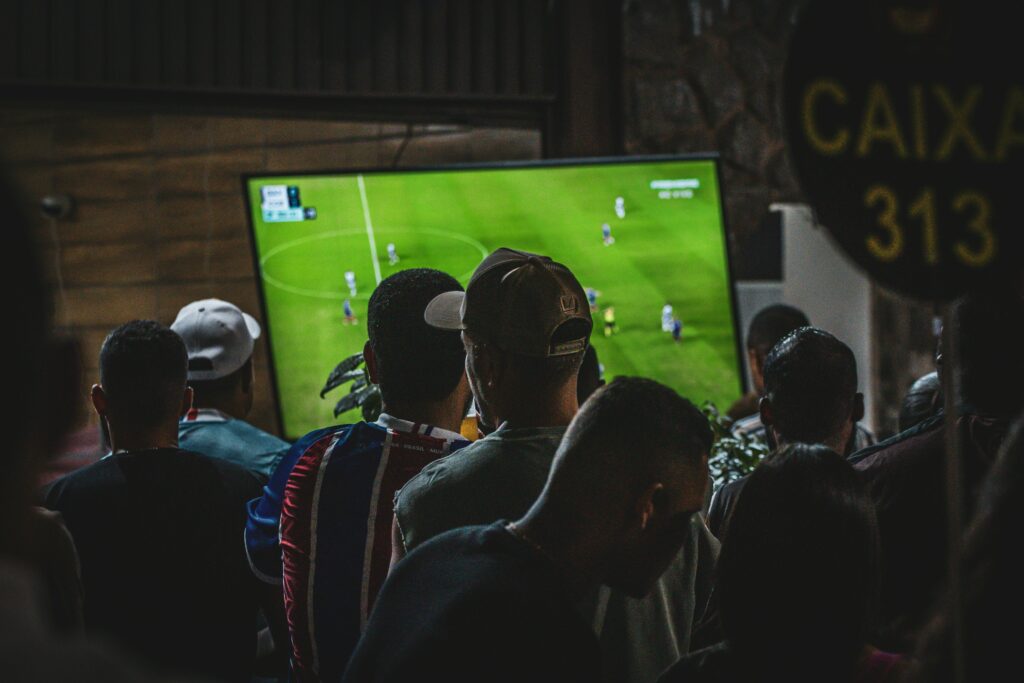

You’ve seen it. That deafening roar in the arena when a League of Legends team takes the stage. Same sweat.
Same tension. Same raw human reaction as an NFL playoff game.
But then someone says, It’s just video games.
I hear that a lot.
And it’s lazy.
Esports vs Traditional Sports Bfncplayer isn’t about whether one is “better.” It’s about what each reveals (about) how we define competition, who gets to be an athlete, and why fans show up at all.
I’ve sat in broadcast booths for both. Spent years inside NCAA athletic departments and esports orgs. Watched high school football recruits get scouted while also tracking 15-year-old Dota players signing their first contracts.
This isn’t hype.
It’s not dismissal either.
You want real comparison. Not buzzwords. Not nostalgia.
Legitimacy? Check. Economics?
We’ll break down actual revenue splits. Physicality? Yes, we’re talking heart rates, reaction times, injury patterns.
Culture? Let’s talk fandom, media rights, and why a Fortnite tournament draws more teens than the NBA Finals.
I’m not here to convince you. I’m here to give you facts you can use. No fluff.
No agenda. Just what’s true. And why it matters.
Skill, Training, and Physical Demand: Beyond the Keyboard
I used to think esports was just clicking fast. Then I watched a pro LoL team’s daily schedule.
They train 10 (12) hours a day. Not just playing. VOD review.
Mental conditioning. Physical therapy. Same grind as elite gymnasts or swimmers.
That’s not hype. It’s measurable.
Peak heart rates during clutch moments hit 180 bpm. Same as a boxer mid-round. Hand-eye coordination scores beat Olympic shooters.
Not close. Beat them.
You’re probably wondering: how is that possible without running?
Cognitive load explains it. Five roles. Constant decisions under 3-second pressure.
Multitasking like air traffic control. UC Irvine tested MOBA players’ visual processing speed. They’re 0.2 seconds faster than NCAA basketball point guards.
That’s not trivia. That’s real neuroperformance.
Athleticism isn’t just muscle. It’s adaptability. Precision.
Endurance. Recovery. All under stress.
The myth? “No physical exertion = no athleticism.” Wrong. Dead wrong.
Bfncplayer shows exactly how deep this goes. Real-time biometric tracking from actual high-stakes matches.
Esports vs Traditional Sports Bfncplayer isn’t about who’s “more athletic.” It’s about recognizing different kinds of strain.
Your body doesn’t care if the sweat comes from a keyboard or a court.
It just knows when you’re pushing hard.
And these players? They’re pushing hard.
How Long Can You Last in This Game?
I played competitive League for six years. Retired at 25. Not because I lost skill (but) because my body couldn’t handle the 14-hour days anymore.
Traditional athletes retire at 28. 32. Esports pros? 24 (27) is the hard ceiling for most. That’s not normal.
It’s a symptom.
FIFA and the IOC have anti-doping rules, age eligibility windows, and arbitration courts that actually work. ESL and FaceIt? They copy the logos.
Not the enforcement.
Overwatch League tried a CBA. MLB’s has existed since 1966. Guess which one covers dental, mental health, and guaranteed severance.
You think Team Liquid Academy is like MLS Next? It’s not. No salary cap.
No mandatory curriculum. No minimum coaching hours. Just hopeful kids and a Discord server.
And don’t get me started on pensions. Or health insurance. Or anything that looks like retirement support.
You can read more about this in Bfncplayer gamers guide by befitnatic.
Esports vs Traditional Sports Bfncplayer isn’t about hype (it’s) about who gets paid after the stream ends.
I know three ex-pros who filed for unemployment last year. None had health coverage from their org.
That’s not sustainable. It’s just expensive talent turnover.
Fix the backend first. Then talk about growth.
Esports vs Traditional Sports: Where the Money Actually Lives

I watched the Super Bowl halftime show. Then I watched a League of Legends Worlds final. Same energy.
Different wallets.
Broadcast rights fund football teams like oxygen funds lungs. 60. 70% of revenue. Tickets? 20%. Merch? 10%.
Solid. Predictable. Heavy.
Esports flips that. Sponsorships pull 45%. Media rights are digital-only and make up 30%.
Merch is 15%. Licensing? 10%. No cable contracts.
No stadium mortgages.
Ad spend proves it. Esports ads jumped 22% in 2023. Linear TV sports ads dropped 4%.
Statista and Newzoo both back that up.
Franchise fees. $20M to $60M for an OWL or LCS slot (aren’t) ego plays. They’re infrastructure bets. That money builds production hubs.
Funds anti-cheat R&D. Pays for broadcast engineers who know what a “ping spike” actually looks like.
Twitch subs and in-game skins? Native. Built-in.
Not bolted on later like NFL+ (which still feels like a PDF manual someone mailed you).
Esports revenue dipped in 2022. 2023. So did everything. But it bounced faster.
Lower fixed overhead. Fewer arenas. Less debt.
You want proof? Look at how fans engage. Or better yet, check out the Bfncplayer Gamers Guide by Befitnatic.
It breaks down real player behavior, not boardroom fantasy.
Revenue composition tells the truth.
Esports vs Traditional Sports Bfncplayer isn’t just about games. It’s about where value lives now.
Esports Fans Don’t Just Watch. They Build
I watched a 16-year-old in Manila design a full Valorant skin pack last year. Then saw it get voted into an official community tournament.
That doesn’t happen at the Super Bowl.
Conventional sports fans sit. Esports fans co-create. Mods, overlays, Discord plan trees, custom lobbies.
It’s not participation. It’s ownership.
74% of esports viewers are under 35. NFL? 41%. League of Legends players outside North America and Europe? 62%.
MLB’s international roster spots? Just 18%.
You don’t need a $200 ticket and a flight to feel part of it.
Twitch is free. YouTube is free. A mid-tier laptop runs most titles.
Stadiums cost money. This does not.
No halftime show. Instead: live voting that bans maps or picks skins mid-tournament. You’re not watching a script.
You’re helping write it.
Traditional sports still win on legacy trust. On grandpa taking you to your first game. On city pride that sticks like gum on pavement.
But if you’re asking how many people can actually join in real time?
How Many Players Can Play Online Bfncplayer
Esports vs Traditional Sports Bfncplayer isn’t about which is “better.”
It’s about who gets to touch the wheel. And right now? The fans are holding the steering wheel.
Competition Just Got Wider
I used to think esports was a sideshow.
Turns out I was measuring with the wrong ruler.
Esports vs Traditional Sports Bfncplayer isn’t about who wins. It’s about what counts as real skill. And who decides.
You’re tired of hearing “but it’s not real sport” from people who still check TV ratings like they mean something. They’re stuck on old metrics. You’re not.
Training load? Pro gamers log 8. 10 hours daily. Same as Olympic swimmers.
Revenue mix? League of Legends Worlds out-earns the NBA Finals in digital ad spend. Fan interaction?
Twitch chats move faster than stadium chants. And shape the game live.
That parity isn’t coming. It’s here. Measured.
Verified.
So pick one thing from this article. Training, money, or how fans show up. Apply it to a sport you love.
Watch your assumptions crack.
The future of sport isn’t analog vs. digital. It’s layered. Hybrid.
Defined by who shows up, how they train, and what they build together.
Your turn.
Go test it.

 Cheryll Basserton writes the kind of expert commentary content that people actually send to each other. Not because it's flashy or controversial, but because it's the sort of thing where you read it and immediately think of three people who need to see it. Cheryll has a talent for identifying the questions that a lot of people have but haven't quite figured out how to articulate yet — and then answering them properly.
They covers a lot of ground: Expert Commentary, Player Strategy Guides, Game Reviews and Ratings, and plenty of adjacent territory that doesn't always get treated with the same seriousness. The consistency across all of it is a certain kind of respect for the reader. Cheryll doesn't assume people are stupid, and they doesn't assume they know everything either. They writes for someone who is genuinely trying to figure something out — because that's usually who's actually reading. That assumption shapes everything from how they structures an explanation to how much background they includes before getting to the point.
Beyond the practical stuff, there's something in Cheryll's writing that reflects a real investment in the subject — not performed enthusiasm, but the kind of sustained interest that produces insight over time. They has been paying attention to expert commentary long enough that they notices things a more casual observer would miss. That depth shows up in the work in ways that are hard to fake.
Cheryll Basserton writes the kind of expert commentary content that people actually send to each other. Not because it's flashy or controversial, but because it's the sort of thing where you read it and immediately think of three people who need to see it. Cheryll has a talent for identifying the questions that a lot of people have but haven't quite figured out how to articulate yet — and then answering them properly.
They covers a lot of ground: Expert Commentary, Player Strategy Guides, Game Reviews and Ratings, and plenty of adjacent territory that doesn't always get treated with the same seriousness. The consistency across all of it is a certain kind of respect for the reader. Cheryll doesn't assume people are stupid, and they doesn't assume they know everything either. They writes for someone who is genuinely trying to figure something out — because that's usually who's actually reading. That assumption shapes everything from how they structures an explanation to how much background they includes before getting to the point.
Beyond the practical stuff, there's something in Cheryll's writing that reflects a real investment in the subject — not performed enthusiasm, but the kind of sustained interest that produces insight over time. They has been paying attention to expert commentary long enough that they notices things a more casual observer would miss. That depth shows up in the work in ways that are hard to fake.